
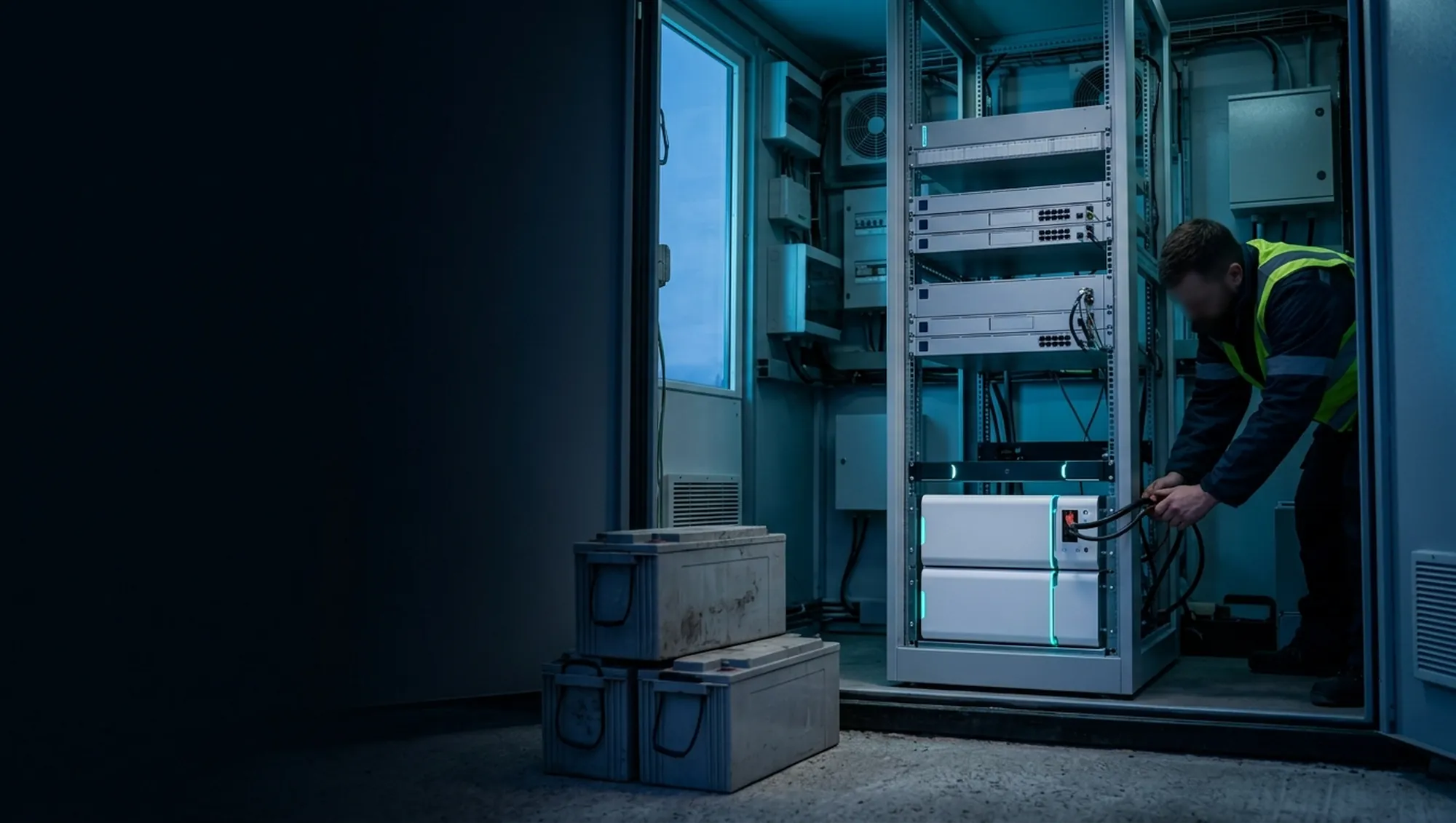
Scenario
Replacing lead-acid batteries at base stations
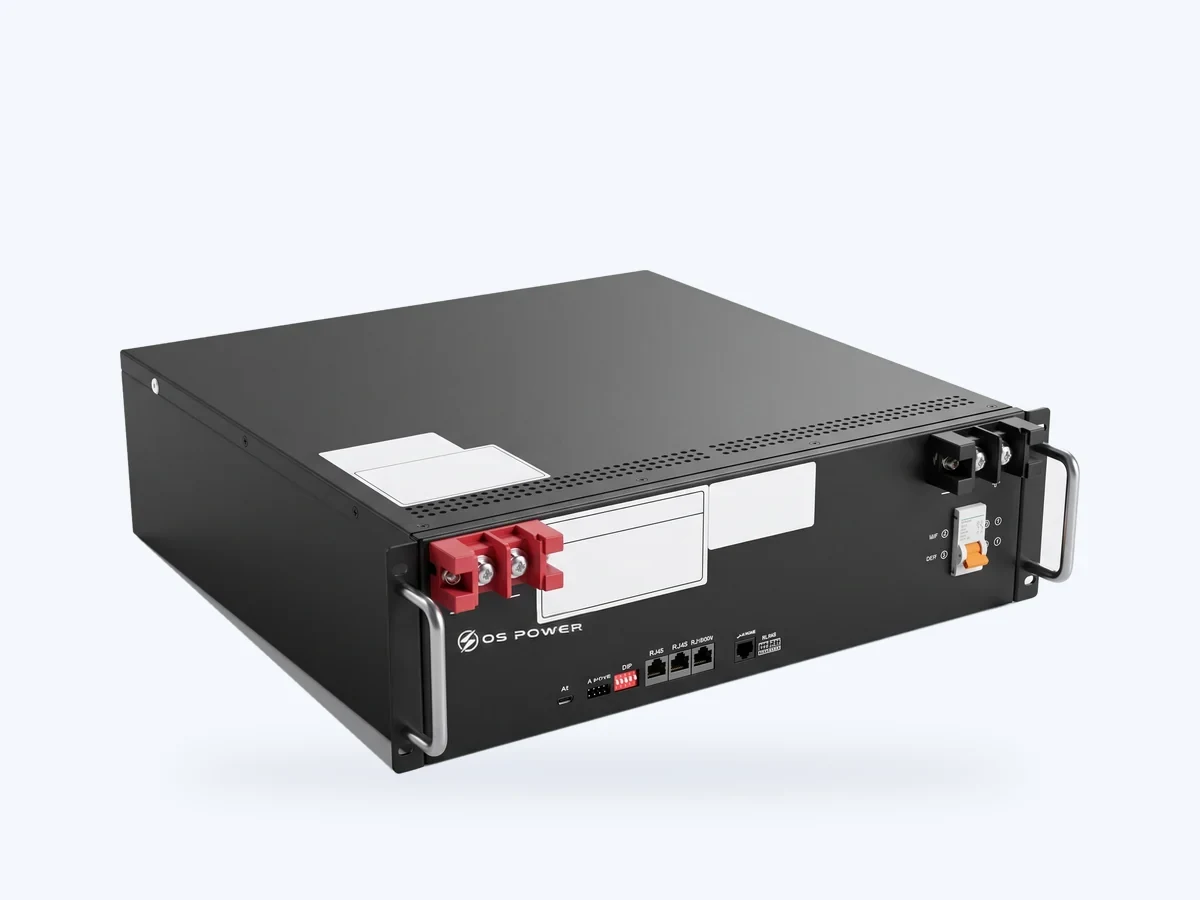
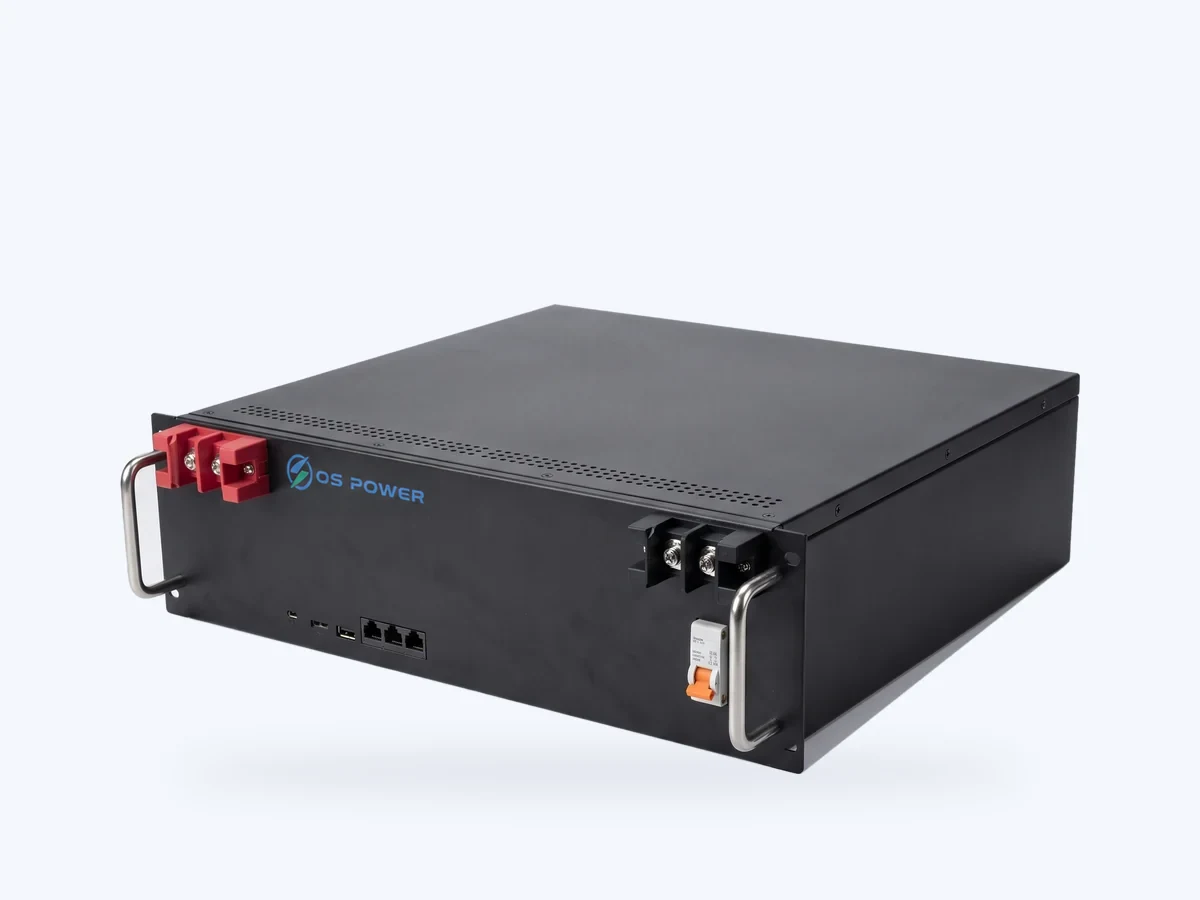
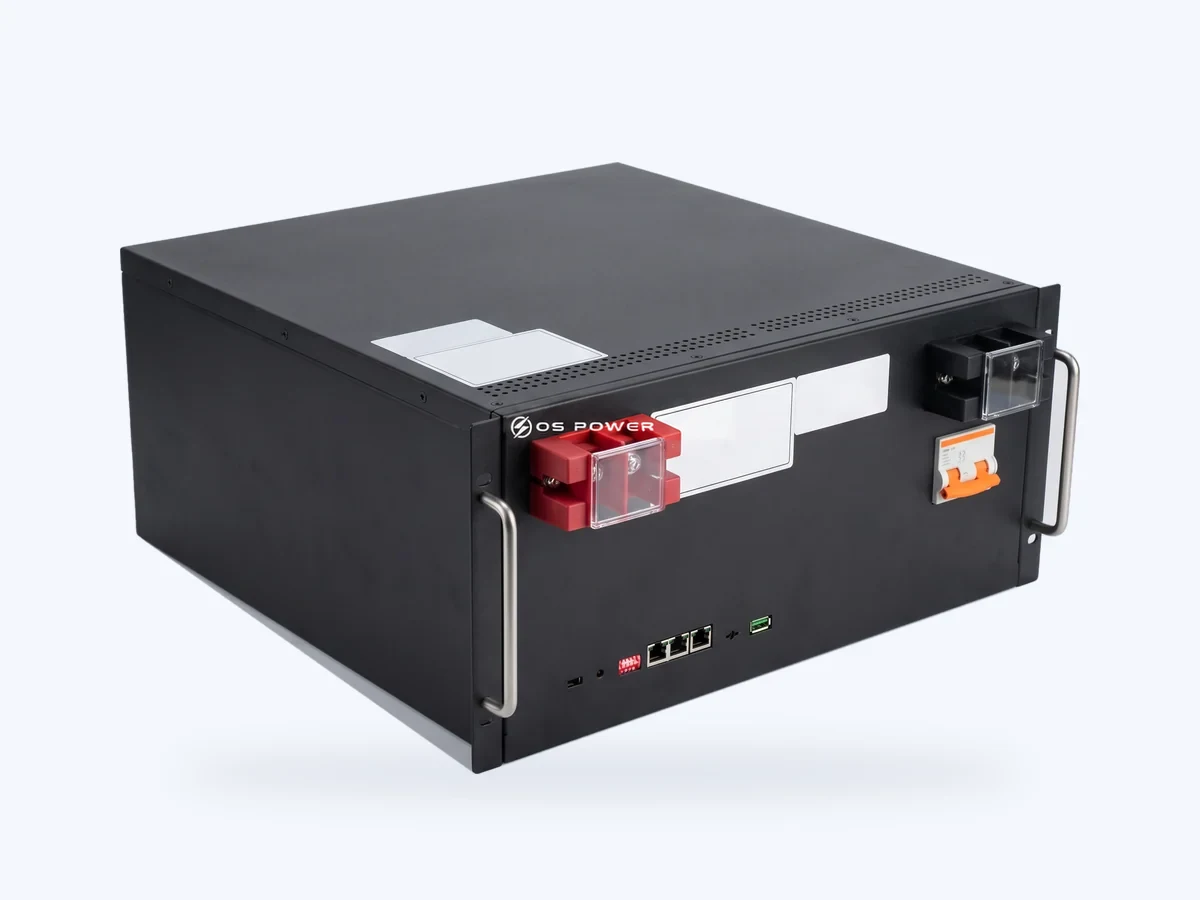
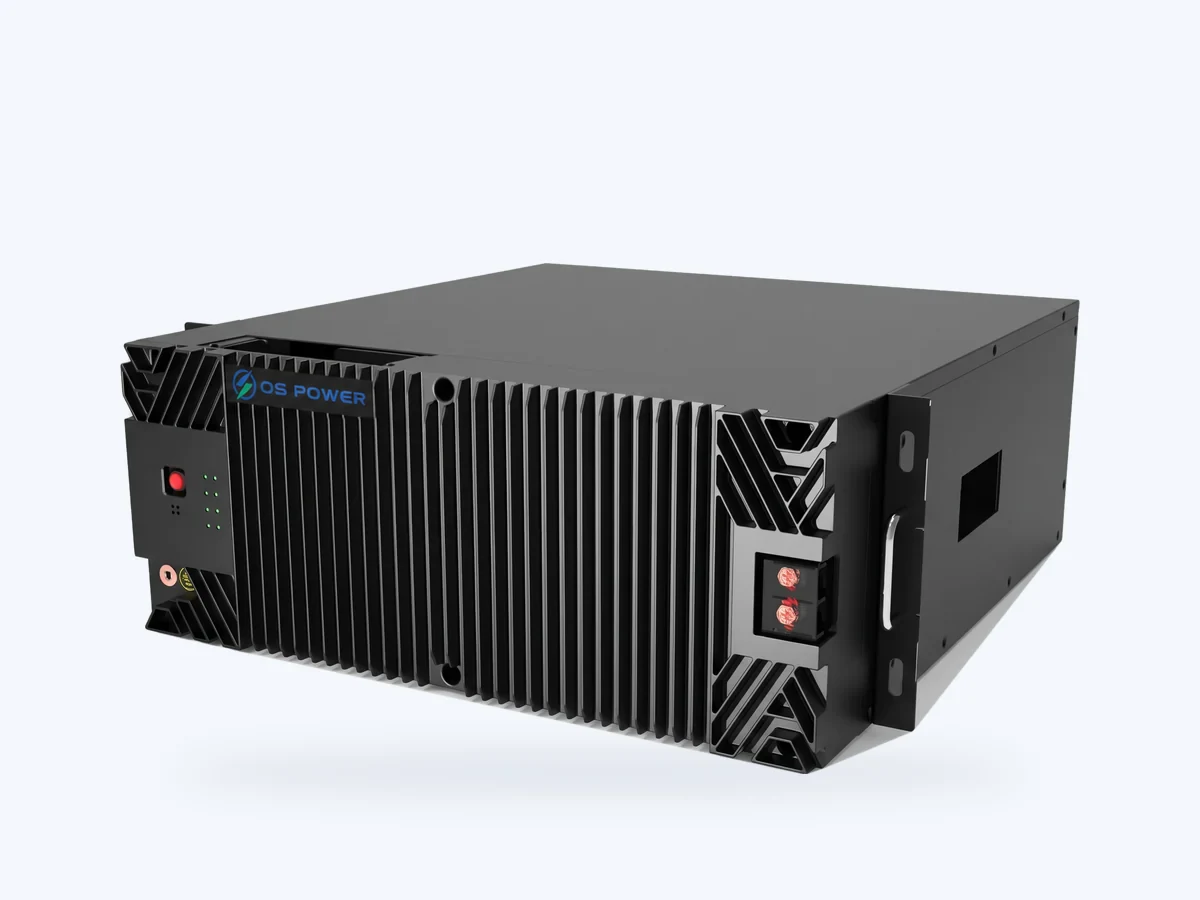
A 48 V lithium module fits the same rack in place of four 12 V blocks, works with the existing power system and needs no replacement over its service life. The transition is phased, as lead-acid batteries reach end of life.
Effect
3-4 times
lower weight and volume of the battery kit
per model datasheets6,000+
cycles at 80 % DOD for the 100 Ah module versus 400-500 for lead-acid
module datasheet; industry values0 replacements
over 10 years in a heated equipment room versus 1-2 for lead-acid
OS Power calculationWhat is wrong with lead-acid
Short service life
A lead-acid battery lasts 3-5 years in an equipment room and 1.5-2 years with frequent outages. Every replacement means procurement, a site visit and disposal.
Weight and space
A kit for 4 hours of backup at a 2 kW load is 16 blocks of 30 kg each. Floors and racks are designed with margin, and no space is left for new equipment.
No condition data
The remaining capacity of lead-acid is only known when the grid goes down. A failure is discovered when the station is already off air.
Theft
Lead is easy to resell: it is sold for scrap. The damage is the cost of the kit plus station downtime.
Solution
How it works
48 V LFP lithium module with built-in BMS: monitoring of each cell, data exchange with the power system, protection against deep discharge and overcharge.
- Site surveyPower system type and controller version, load, required autonomy, rack space. Via questionnaire or on-site visit.
- Selection and compatibility checkModel and number of modules, charge and disconnect settings, RS485 or CAN communication protocol.
- Phased replacementModules are installed in the 19-inch rack in place of lead-acid. Sites are converted as old batteries reach end of life, without interrupting service.
- Remote monitoringState of charge, temperature and remaining life are visible in the monitoring system via the site controller. Life forecasting instead of unplanned site visits.
- primary source
- backup
- unstable
- not available
The grid supplies the load and charges the battery; during an outage the battery takes over the load without interruption.
Lead-acid and lithium at the same site
| Parameter | Lead-acid 12 V | LFP lithium 48 V |
|---|---|---|
| Kit for 8 kWh of usable energy | 16 blocks of 100 Ah, about 480 kg | 2 modules of 100 Ah, 82 kg |
| Permissible depth of discharge | 50 % | 80-90 % |
| Cycle life | 400-500 cycles | at least 6,000 cycles at 80 % DOD |
| Service life in an equipment room | 3-5 years | 10 years or more |
| Condition monitoring | none | BMS: charge, temperature, remaining life per module |
| Power system compatibility | analog | RS485, CAN, dry contacts |
Lead-acid batteries - typical industry values; lithium - per the 100 Ah model datasheet. For a specific site we calculate based on the load profile.
Other scenarios
Long outages and a poor grid
The battery carries the load, the genset runs in short, efficient cycles based on state of charge.
Learn moreCold and heat
NFPP sodium charges from -20 °C and discharges at -40 °C without heating, operates up to +60 °C.
Learn moreOff-grid site
Genset, solar and storage in one cabinet: many times less fuel and fewer trips to the site.
Learn moreTheft protection
Software lock, displacement sensor and GPS: a stolen battery does not work and can be located.
Learn moreIntegrated cabinet instead of an equipment room
Power, batteries, climate control and space for radio equipment in one cabinet: 75 % less floor space.
Learn moreRequest
Tell us about your sites
Number and type of sites, climate, load, installed power system and what is currently in the battery compartment. We will reply with a preliminary configuration and pilot terms.